We are always innovating and updating our growing practices to reduce our environmental footprint, from sourcing natural inputs from local manufacturers to incorporating compost to reduce water use.
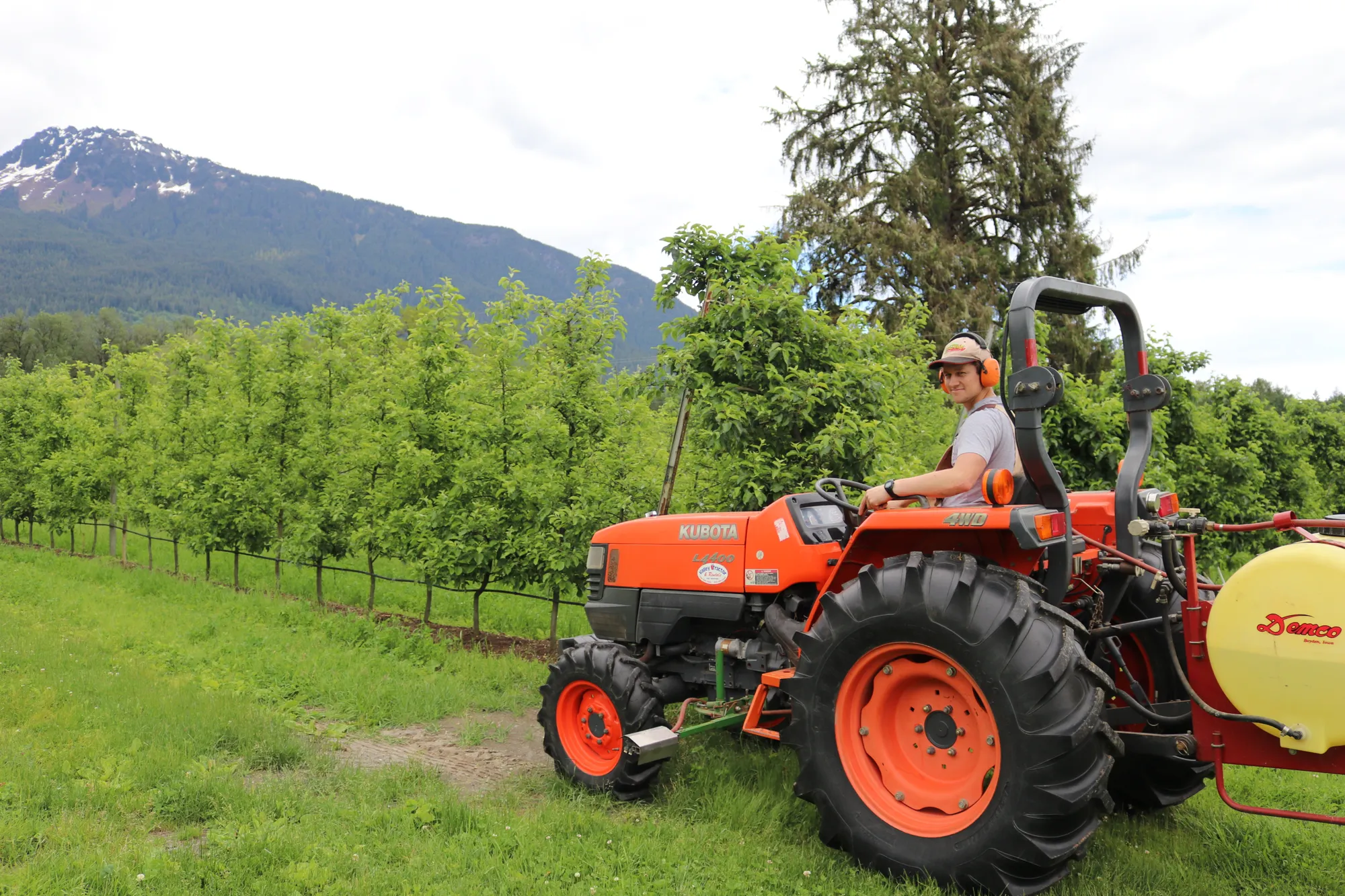
Certified organic
Natural inputs, and the whole ecosystem watched.
We care deeply about using naturally occurring inputs and monitoring our farming ecosystem, so we improve soil tilth and prevent ecological damage. These are the seven practices behind every apple and grape.
01 Every spring
Composting
Every spring, a strip of horse manure compost is spread down all our tree rows.
What the compost does
- SoilRetains soil moisture
- InsectsPromotes insect biodiversity
- HabitatShelters beneficial insects
- NutrientsImproves nutrient cycling
- LifeRaises soil microbial levels
- InputsReduces the need for fertilizers
02 Between the rows
Cover cropping
Between the rows of trees and vines, we plant a variety of cover crops from year to year. Each species brings its own benefits.
What we sow
- Nitrogen fixation
- Breaking up compaction
- Adding organic matter
- Moisture retention
- Fumigation
- Food and shelter for beneficials
- Keeping nutrients out of ground water
03 Every week
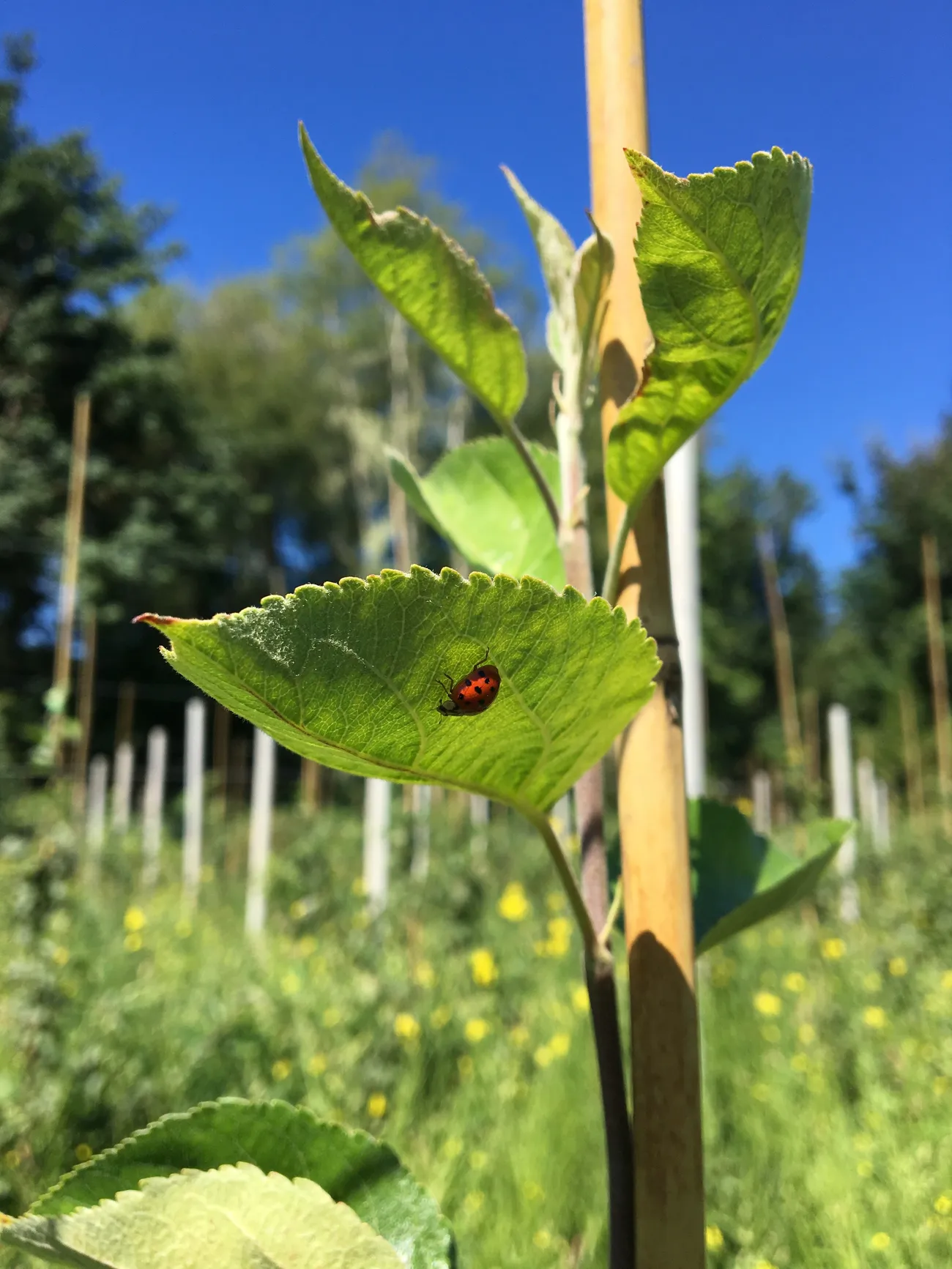
Insect monitoring
Every week we monitor the population levels and life cycles of key pests and beneficial insects. Keeping a close eye on the beneficials, not only the pests, is critical to a robust pest control system.
It lets us time every input so it does no harm to the beneficial insects.
04 Through the season
Lab testing
Testing the soil, foliage, fruitlets and fruit is how we know which nutrients the plants are actually using. We take a number of these tests at set times, so no nutrients are wasted and any deficiency is addressed before it can do physiological damage.
05 Drip, not spray
Water conservation
Every tree and vine is irrigated through drip tubing, which cuts water loss from 60% to 3% compared with traditional sprinkler systems.
06 The tricky one
Weed control
In organic farming, controlling weeds is very tricky, because synthetically derived herbicides such as glyphosate or 2,4-D are not permitted. To control weeds well we use compost and organic herbicides such as vinegar.
Timing each application to the right humidity and temperature of the day can make all the difference.
Not permitted
- Glyphosate
- 2,4-D
What we use
- Compost
- Organic herbicides, such as vinegar
07 Since 2016
Certified organic
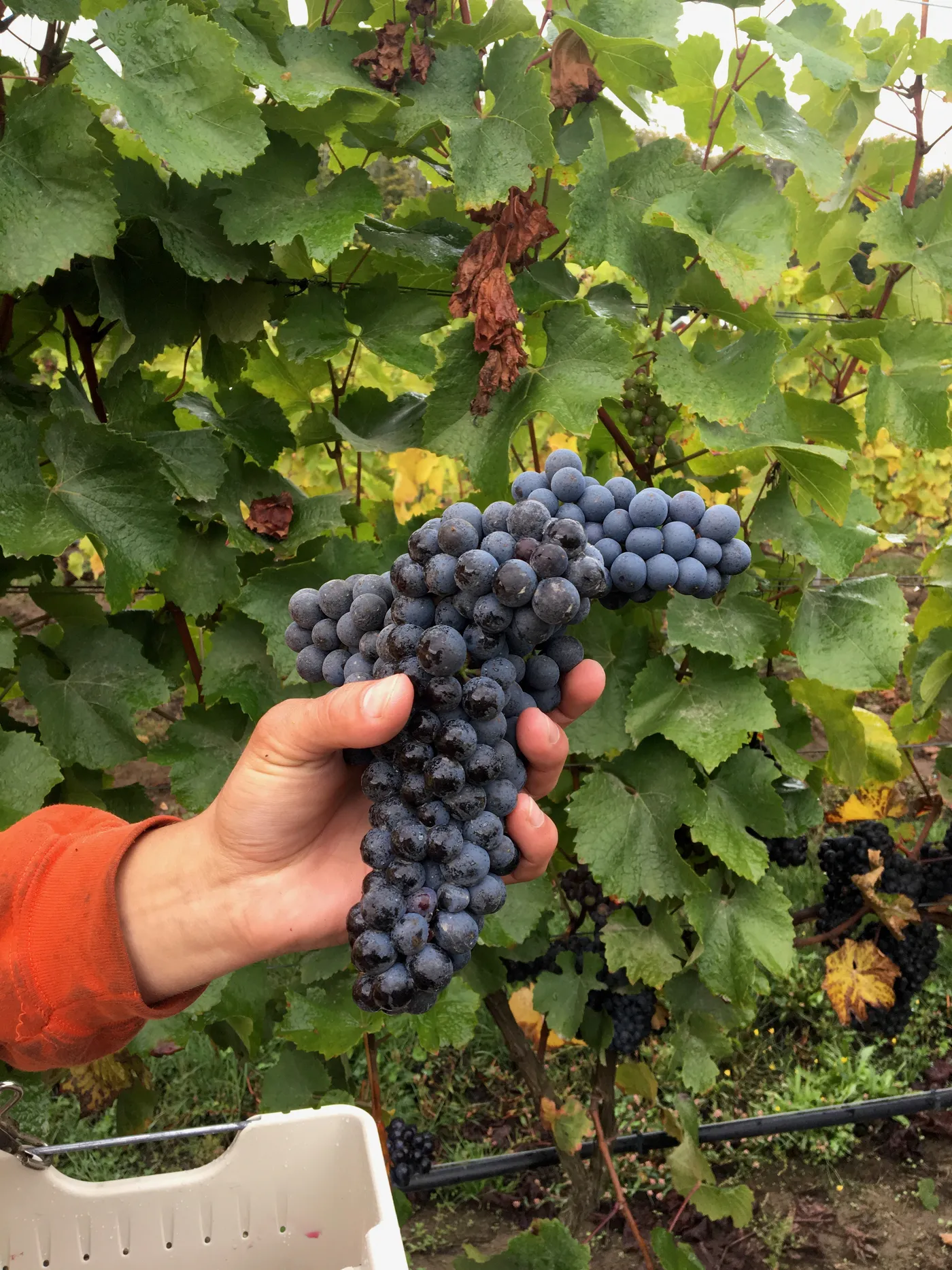
Sauk Farm has been certified organic by the Washington State Department of Agriculture (WSDA) since 2016. Certification means following federal and state organic regulations, such as using only certified organic fertilizers and seeds.
Organic fruit
See what all that care grows.
The apples and grapes we pick each September and October, variety by variety.
Our organic fruit →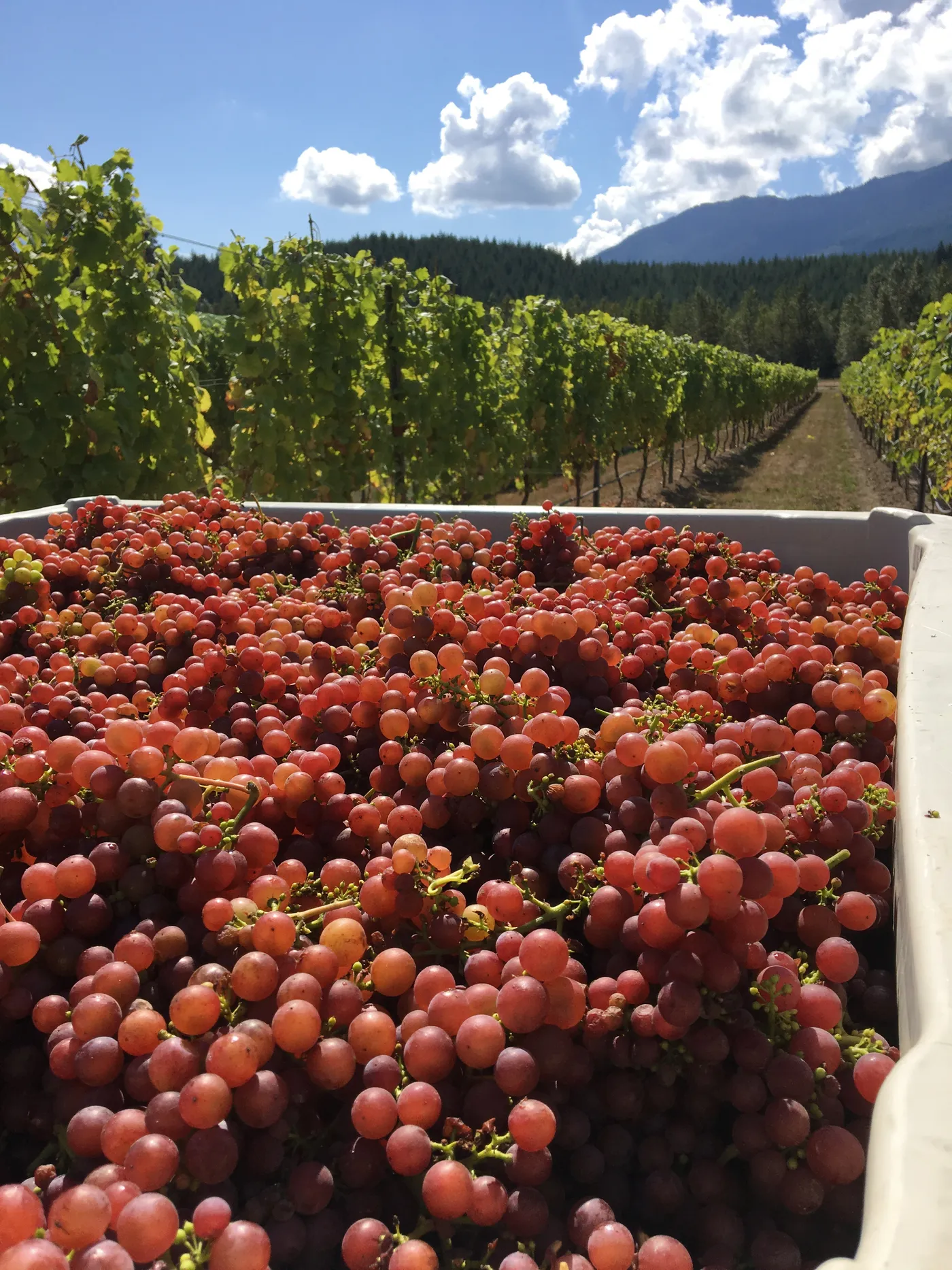
The monthly newsletter.
Sign up and save 10% off your first purchase.
Thank you. Watch your inbox for the code.